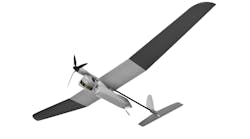
With the number of unmanned aerial systems (UASs) in US airspace set to drastically rise by 2015, much of the population is concerned about safety due to possible collisions. It appears that a solution to track those UASs may be easily attainable, thanks to work done by the US Air Force and Raytheon Co. In concept evaluation demonstrations, they were able to show that existing air-traffic-control equipment could be modified to safely track the presence of nearby unmanned aircraft.
Rather than invest in new infrastructure, it is possible to leverage Ground Based Sense and Avoid (GBSAA) equipment—based on the Airport Surveillance Radar Model-11 (ASR-11)—and the repurposed Standard Terminal Automation Replacement System (STARS) air-traffic-control system. ASR-11, the STARS system, and its surveillance data processor are proven, NAS-certified systems for safely separating aircraft.
The testing, which was performed near Edwards Air Force Base at Gray Butte Airfield in California, involved a moving “dynamic protection zone” (a collision-avoidance alerting capability) around the UAS. To avoid near-mid-air collisions, that zone provides a series of alerts to the UAS pilot as airborne objects (i.e., balloons or ultra-light vehicles) approach the protection zone. GBSAA also builds on risk-mitigation technology used to mitigate interference from wind turbines near airports. Leveraging the existing NAS-certified installed base of ASR-11 and STARS systems, Raytheon will continue testing GBSAA with the US Air Force at other sites across the country.